The Kitchen Kings- Divided by Cuisine, United by Food
- Anezka Saraogi & Avni Sheth
- Jul 15, 2022
- 15 min read
Updated: Jan 15, 2025
With over 30 years of experience in the food business, Chefs Irfan Pabaney, Paul Kinny and Moshe Shek open up about their art, business and what it takes to stay relevant in this ever evolving industry.

(L-R) Chefs Paul Kinny, Irfan Pabaney & Moshe Shek
For some, an hour maybe just 60 minutes, but for chefs, an hour is a ticking time-bomb between turning a satisfied customer into an unsatisfied one with a bad dining experience. An hour in the busy lives of chefs can tell a lot about the art, that is food and its artists. Cuisines and experiences divide them, just like the nature of their workplace, but the art of creation is what unites them. A luxury experience, a cuisine speciality and a cafe in the heart of a city that never sleeps are definitely demanding. But being up and close with the Kings of the kitchen tells one that it is not the pressure, but only passion that can drive you forward in this industry called ‘Hell’s Kitchen.’
A large part of the craft is met with the shackles of time, constant need of variation and now, surviving through the pandemic. The wars of the big mad world do not spare art and its creators. Their palette, in this case, the kitchen, is filled with experiments, condiments, and of course, the artists themselves- the chefs- who are constantly trying to satisfy the ever-evolving taste buds.
Competition in culinary is cutthroat, and as all three of our chefs agree, it is not all roses and champagne as it is often portrayed in popular media. New, fresh minds are entering the field every day, and to stay at the top of their game in a city like Mumbai, only perfectionists are making the cut. As global cuisines have entered the Indian map since the 1990s, the Indian palette has transcended into a more experimental taste and fondness towards food. Keeping up with this demand, the menus have broadened to offer a variety of cuisines to serve everyone’s needs – local, global and their fusions.
However, in this very same contemporary world with a plethora of choices and options, the aroma of a fine cooked Dhansak, Sushi or Falafel, entices the foodies’ taste buds equally and blur the lines of any differences that perhaps exist in the world of food wars.
Mumbai is filled with cafes and restaurants spanning various cuisines and fusion experimental, but only a few stand out among the many. SodaBottleOpenerWala (SBOW), Cafe Knead and St. Regis’ kitchen are undoubtedly one of them.
Authenticity is what brings out the best of these places, and who better to have on board other than three well known, and well-respected chefs from various renowned food outlets in the city. It is the fusion of Mumbai street food and Parsi cuisine that Irfan Pabaney introduced in SBOW’s menu that appealed to fusion lovers. St. Regis, on the other hand, provided a luxury experience to Asian cuisine with the Director of Culinary Paul Kinny. For the Middle-Eastern food lovers, Moshe Shek’s trip to Israel turned out to be a blessing as Cafe Knead was born out of his will to bring to the city the art of his roots.
In intimate interviews with Irfan Pabaney, Paul Kinny and Moshe Shek, a closer look into the range of workplaces gives insight into staying relevant in the food industry even when times are tough.
They say, sometimes you just need a spark, but the spark that was found between the three chefs turned out to be a coincidence.
Pabaney grew up all over the world to a Filipino mother and an Indian father. His father was working with the United Nations when he was young and required to travel, leaving Irfan and his brother alone at home while their mother was at work.
He was first introduced to cooking by thawing frozen food curries that his mother used to pack for their meals while she was at work. He found a keen interest in making meals out of something that was frozen. That is when he discovered that he loved the flavours, and he loved this process. This made him continue indulging in his passion even after moving to India during his high school days.
Chef Irfan Pabaney
He was exposed to Parsi culture, where he learnt more about the cuisine and the flavours of food, which drove him to take up cooking as a career choice. While Pabaney got introduced to cooking by thawing food, Paul Kinny grew up in what he calls a “Khaata peeta” family.
Kinny recollects his mother cooking traditional food belonging to the Goa-Konkan link while also experimenting a lot with traditional Maharashtrian food. He became passionate about cooking just by simply admiring his mother's delicious food that he was fed during his childhood. Very early in his life, Kinny decided that this is where he sees himself even thirty years later.
Shek, on the other hand, grew up living a very simple life. He was cut out to be everything, but a chef. He was a trained pilot, aspired to become a doctor and also started a tiffin service. But life had it the other way round for him. After freshly graduating from college, he decided to take a solo trip back to his hometown, Israel. Only when he stayed there for long and got a taste of the tumultuous amounts of food that he was served, did he take a shot at working in a cloud kitchen where he learnt how to make bread and a couple of other things.

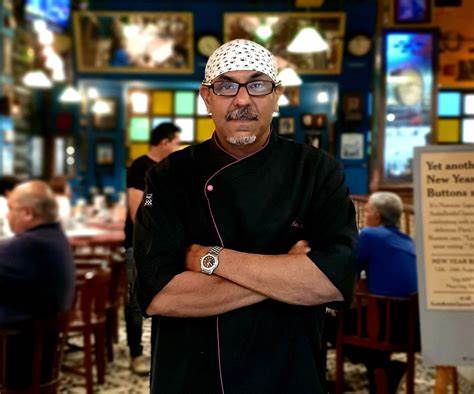
Chef Moshe Shek
When he returned to India, he decided he wanted this to be his career, and did exactly what Irfan and Paul did as well – joined Sophia Polytechnic.
“I think Sophia’s was a great experience for all of us. We got exposed to so many different types of cooking. I sparked an interest in making bread from Sophia,” said Shek.
Sophia polytechnic is the melting pot for the three individuals we had on board. Even though they were divided by culture and method, they were all united by a common interest. Pabaney, Kinny and Shek also happened to belong to the same batch for their tenure at Sophia’s.
All three were at the top of their game bringing their passion to life at college impressing the higher-ups with every new creation of theirs. Kinny and Shek had the chance to be scouted by none other than the Taj Hotel right after graduating. Paul worked at the Zodiac Grill and Moshe on the other hand worked at another restaurant in the Taj Palace before going to London at the Langham Hilton Hotel to work for a couple of years. While they were setting up shop climbing the ladder step-by-step, Pabaney wanted to venture out into the open. He wanted to start his restaurant, which was impossible at the time, but he managed to work in partnership with Rahul Akerkar at Indigo.
A very interesting side to passion is that it has so much of a person’s history attached to it. It is the places they have visited, the people they have met and of course the food they’ve been exposed to. But, sometimes, it is also the risk they have chosen to take. With over three decades of experience, challenges and learnings, the chefs now gave very objective hindsight into the choices they made in their 20’s.
Chef Pabaney’s portfolio has predominantly South-East Asian and Continental cuisine, the love for which stemmed from his childhood spent in the Philippines. It was only three years back that his rendezvous with Parsi cuisine began when he joined Olive Group and there was an opening for the Country Head Chef at SBOW. The opportunity fell into his lap, as he says, and the role offered much more than cooking. With 30 years of experience in his kitty, he gets to brainstorm ideas and perspectives with younger minds at work with him and in turn season them into excellent chefs.
Questions were thrown at him every time he jumped from one stint to another but he remains firm in his conviction that every change brings along with it a whole lot of learning and relearning. “Every time I change, it is to go one step above. It gives me that much more experience,” he says.
After coming to Bombay, he completed his schooling at Maneckji Cooper School and also lived in a Parsi colony. “I had Bawas to the left and the right and everywhere!” Pabaney laughed. Though he never learned to cook Parsi food, this initial exposure gave basic knowledge and made the transition smoother.
At the age of 22, after completing his B.Com, hotel management seemed like a fancy and easy path to Pabaney. But he admits that it was only after he had a couple of stints at hotel kitchens that he learned what the job demanded. His entry into the culinary world was by chance, very contrary to Kinny, who had decided to pursue it as young as 16.
Passion is deeper than just interests and for Kinny, beyond hobbies too. When asked for one piece of advice that he would give to a person entering the industry tomorrow, he said “Don’t do it just because cooking is your hobby. You can't do your hobby for 10-12 hours a day, and sometimes even longer.” That traced us back to his young days when he joined a catering business just as a side hustle to earn extra money but little did he know that it would eventually turn out to be his calling.
Chef Kinny recalls that in the 1990s, being a full-time chef was barely known as a profession. But he caught the eye of a colleague during his catering stint who recommended him to attend hotel management school.
The buzz around Chinese cuisine, back in the day, drew him towards it and he aimed to specialise in the Chinese kitchen. Under the ambit of Asian food, Chinese was the only one that gained popularity in those days. Oriental Asian food was still unheard of.
But as fate would have it, he was posted in European fine dining at Taj Hotel, The Zodiac Grill. “When I look back, I thank God that I didn’t become a Chinese chef.”
This posting had its perks too. Being The Zodiac Grill was a dream come true for Kinny as he got to work with ingredients he had just read of right after college. “There I was, in reality working with the caviar, the truffle and so on.”

Chef Paul Kinny
Ingredients weren't as freely available as is in today’s Indian market. But as the economy opened up, so did the chances to experiment. “Because it [The Zodiac Grill] was a premium restaurant, you could get what you want. It felt like I was thrown into a toy shop!”
With that began experimentation and he had asparagus, zucchini, bell peppers and everything else at his disposal that earlier the Indian market didn’t have. When Sachin Tendulkar offered him a position at his restaurant, he introduced Thai cuisine on the menu as his love for Asian food only blossomed with the newly liberalised Indian food market.
Fusion is not his forte and he believes in rich texture and presentation. In an attempt to preserve the authentic food of regional Indian places, his East Indian roots are still evident in his art. He consciously tries to incorporate flavours into his menu of some delicacies he has grown up with. Kinny added, “Along with global cuisines like Korean food, hyper-regional food of India is also upcoming.”
Similarly, it was his roots for Chef Moshe Shek that opened up a world of new opportunities for him, including Cafe Knead where he sits and talks to us in the middle of a busy day. He was put in a community kitchen while in Israel where he was staying at a farm. “That’s when I knew that this is what I want to do,” said Shek. There is a natural calling that he feels for Mediterranean cuisine.
In a very matter-of-fact tone, he added, “Baking is my passion. But professionally, I am a chef… And Mediterranean cuisine because that’s what I love… I can instantly sync with it.” As for other cuisines, such as Indian and Chinese, it is not that he doesn’t like them. He says that he just cannot do them professionally, which perhaps stems from his food preference. He likes simple flavours, with not much masala, both of which Middle Eastern food offers.
While his choice of specialisation came to him as a natural calling, the choice of entering the culinary world only came after spending school years in confusion between pursuing medicine or aviation. As his interests dawned upon him, he decided to attend culinary school. His previous experience gave him an upper hand and despite missing the admission deadline, he made it to Sophia Polytechnic.
While all three of them specialise in different variations of their specific cuisines, they all believe in one general term: “Ghar ki rasoi”. Pabaney, Kinny and Shek try to incorporate as much of their cultural cuisine in the way in which they cook or manage menus at their workplaces.
Shek’s entire cafe is centred around Mediterranean cuisine, with an emphasis on vegetarian food. Kinny also tries to maximise vegetarian options at his various restaurants. “I feel Indian food has so much variety in terms of vegetarian food, I wouldn’t want to incorporate non-vegetarian if I had a choice,” says Kinny.
He heads a team in an Asian restaurant and subcontracts the Asian cooking to the experts and natives. He handles the food closer to home constantly bringing about changes to the pre-existing food. One of the dishes he aims at giving a twist is the ever so famous ‘Misal-Pav.”
Shek and Kinny focus on moving towards trends, but Pabaney likes to stick to his roots of a typical Parsi centric food taste. He as well as everyone who is an avid Parsi food eater would like to believe that no Parsi food is complete without the quintessential Egg (Eedu), Mutton (Gosht) and Chicken leg (Fadcha). Although a more comprehensive menu compared to the cafe and St.Regis, Pabaney likes to bring about subtle changes to the Parsi world of food by adding his touch of Bombay street food to it.
A kitchen can surely not be run by just an individual, and even if there is a team running it, it can never be executed flawlessly without a leader. Pabaney, Kinny and Shek all take the backseat as far as cooking is concerned, but take the lead in management at their restaurants.
Pabaney handles the logistics of all 8 chains of SBOW across the country. He believes in a strict sense of teamwork and helps everyone in his team get on the same page at all times. He curates menus and new experimental dishes that can be made out of nothing but simply his imagination. During the pandemic, he was growing in favour of young aspiring chefs and was known as the ‘Chef in Shorts. “I don’t like dressing formally, even at the restaurant I am always in shorts, I find myself most comfortable in shorts!” Irfan’s outgoing and mischievous nature gives justice to his honorary pseudonym.
Kinny on the other hand is a more dignified culinary director due to his hotel catering to the upper class. As a culinary director, he manages over 8 restaurants, does a managerial check, helps organise and plan for events, curates menus and also cooks and performs quality checks. Unlike Pabaney, Kinny doesn’t have as much time on his hands to wait for his team to catch up, which was evident as he met us on a working Sunday!
“If they’re not good enough, they can’t be on my team. When I am handling the food for a wedding, the bride’s father comes and lays all the responsibility on my shoulders as far as the food is concerned. His izzat is in my hands, he has trusted me with it.” He discusses the larger than life nature of Indian Madwadi weddings and how food is the centre of it, more than the bride and groom. While curating wedding menus, which has to cater to hundreds of taste buds in one evening, creativity is tested. “Somedays I feel I have become Paul Mehta instead of Paul Kinny!” he laughs.
He considers the kitchen as a practice of driving. He claims it is necessary to foresee and anticipate things when you handle larger groups of people. You have to be able to cater to everyone and any possible last-minute needs.
Shek works very differently from the other two. He has a fully trained staff team that cooks for the cafe in the kitchen, while he spends time in the cafe every day baking fresh bread. He treats his staff as a small family and works together in tandem with them at all times.
By nature, Shek is very soft-spoken, enterprising and a quiet worker. If someone were to go into the cafe for the first time, one would not even notice the tall blue-eyed man making bread in the corner.
Where Kinny and Pabaney emphasised trying out new cuisines, Shek sticks to a strong principle of his roots. While the others want to expand, he doesn’t find the need to go beyond his lieu of Kala Ghoda, “I’ve had enough of branching out, I want Knead to be only one.” While he may not be very vocal about his projects, Cafe Knead was initially only known to the people who frequented the area or knew of his new venture. All of Knead’s clientele today is organic and through word of mouth. There is no advertising or social media presence. “I don’t even know how to use Instagram,” he added.
Shek’s down to earth nature and self-trust is what has gotten him so far, enough to be trusted by the entire population of Mumbai in terms of the quality of food being served.

Chef Moshe Shek
Like all other industries, the food industry hit an all-new low in business as the pandemic hit in early 2020 and the country went into successive lockdowns. However, all three were the lucky ones who managed to stay afloat by incorporating newer ways of bringing food to the people.
Challenges were different for the new and old businesses. In the case of SBOW, which is spread across 5 cities with 8 outlets, they were able to stay afloat during the pandemic which Pabaney calls “nothing but a speed breaker.'' One of the biggest expenditures in the food business is rent which in any case is beyond one's control. He chalks out things that cannot be controlled in the food business such as rent and electricity bills- along with things that can be such as staff size.
As business went down and numbers shook, there had to be some difficult decisions taken. They had to cut down on their staff numbers and while it did affect livelihoods for people having a literal hand-to-mouth existence, the situation was unprecedented. “There is always the human element that comes in and for us, people in the food business, that's the toughest part.”
He questioned the system of keeping out staff just because the situation was uncertain and devised an alternative. “Even if we keep one person for 15 days and the other for 15, we can at least make sure that they are getting at least 50% of their salaries.” A very team-spirited philosophy laid behind this thought of his as he believes that one needs to do good to the people who work for them. “We are who we are because of them.”
Others still, such as the likes of luxury hotels like St. Regis were able to sail through too, though with similar and different problems. Even the pandemic brought learnings as Chef Kinny recalls, they were learning to adapt every day.
“Suddenly the imports stopped coming. We had to close down a Japanese restaurant because there was no fresh seafood coming from Japan. So we had to find newer ways of using local ingredients. And this is also when the idea of going hyper-regional comes.”
Even the restaurant’s business model had to adapt. As a hotel, St. Regis never considered doing home deliveries and takeaways but this system had to be developed. Additionally, they had to make do with ingredients available in the Indian market such as Tangra style Chinese food. Kinny looks at it optimistically. “As chefs, we were also very creative at that time. We had to find alternate ways to operate the way we do.”
The toughest part for him was when they had to lose some people due to the pandemic. 80-85% of their business depends on International tourists and corporates. When that stopped, income flow naturally dropped as well. He gave a picture of the aftermath of the pandemic too as they had to consciously bring back the people they laid off during the lockdown. Once business gradually started, they made sure that the empty spots of their workforce were filled back.
Shek’s experience reminds one of the longevity of the pandemic as the tough times weren’t over when the lockdown was lifted. Cafe Knead was Shek’s covid baby. It had to close right after they opened; in April 2021 as the second wave hit India. “We couldn’t pay the staff so we had to let them go. That was the hard part and nothing else.”
For him, the pandemic was a learning experience. He looks at it as just a part of life to be accepted and move on. Business began to pick up once the wave settled and since then, Cafe Knead has become a South Mumbai favourite, the area where a majority of his clientele comes from.
Being in the culinary industry sure comes with a lot of perks, but to get them it's a tough journey of sheer grit and determination. Pabaney, Kinny and Shek have worked extremely hard their entire careers to reach the position they are at today among the thousands of other classmates that they had. When asked what made him choose such a fluid career, Moshe sarcastically replied “It’s like asking Husain why he painted horses?” It’s an art, which reflects their growth mediation. But this growth doesn’t stop here as they have big hopes for the year ahead.
Kinny shared a little secret of his with us. “I am working on a recipe book of my own and I look forward to publishing it very soon.” Pabaney and Shek, on the other hand, are hoping for 2022 to bring things back to normal in their restaurants, and not have to lose any more people.
There is one statement that all three of our chefs agreed to, that is, “Don’t get into this industry if you think it's going to be all glamour. That's our only advice to you.”


Comments